
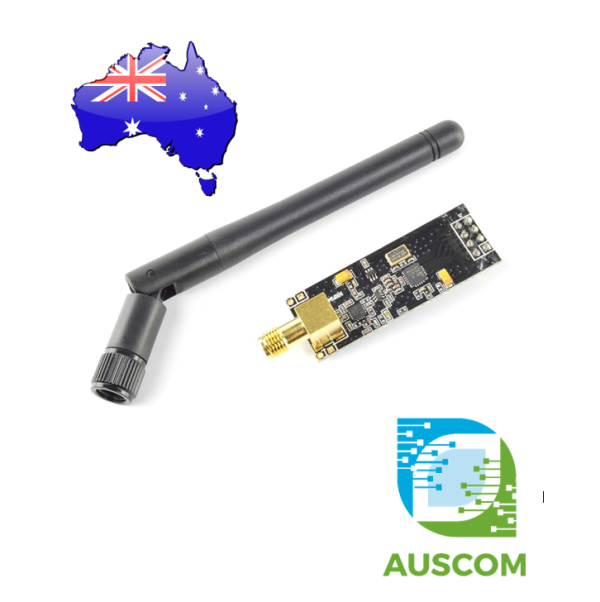
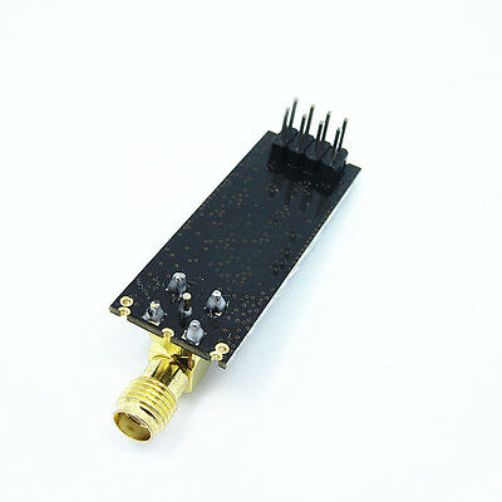
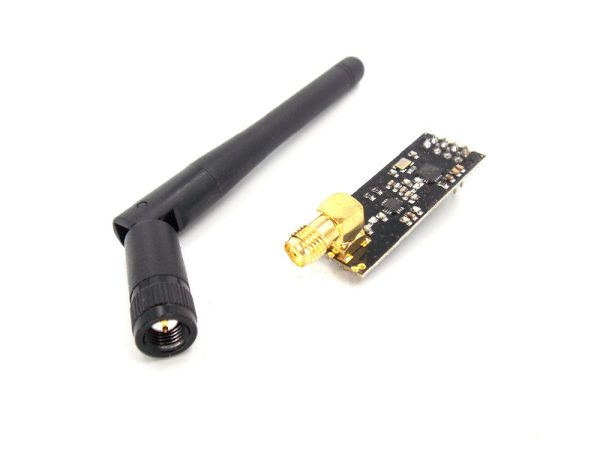
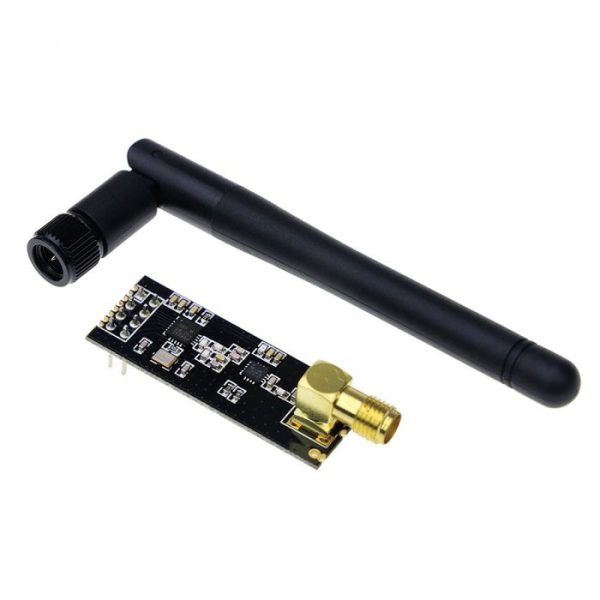
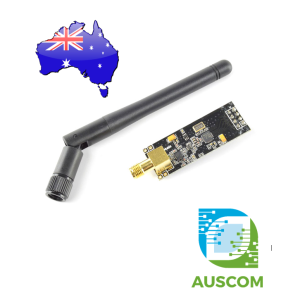
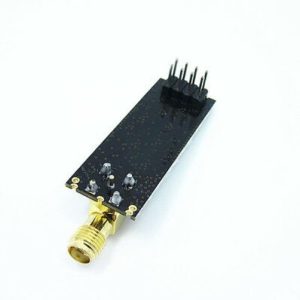
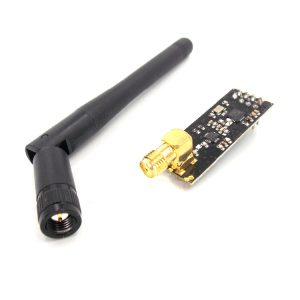
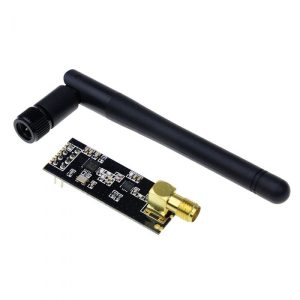
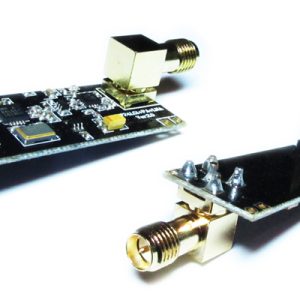
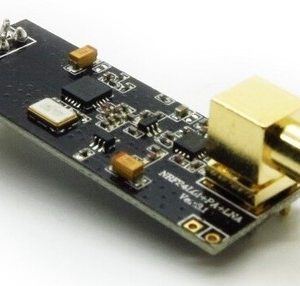
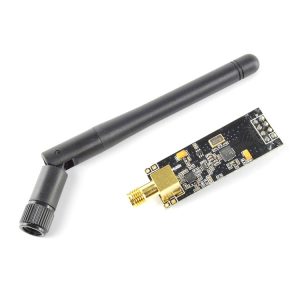
NRF24L01+PA+LNA 2.4GHz Wireless Module 1100m Range 5V 3V I/O SPI Arduino
$7.85 Inc. GST
You save
- Description
- Code Examples
- Additional information
- Reviews (0)
Description
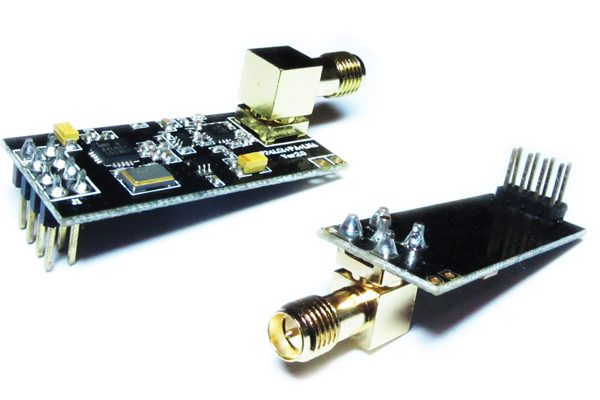
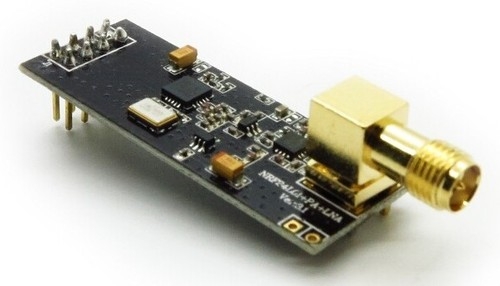
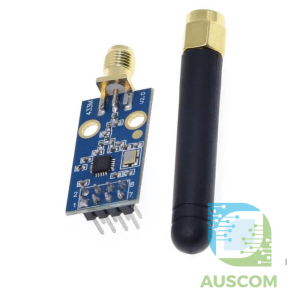
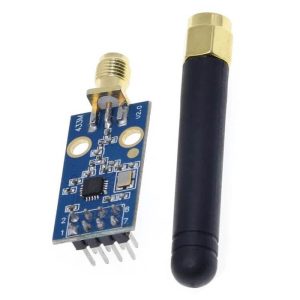
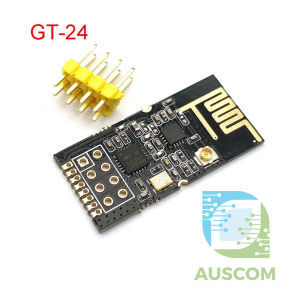
Enhanced NRF24L01+PA+LNA 2.4GHz Wireless Module – Up to 1100m Range – Compatible with 5V and 3V I/O – SPI Interface for Arduino
Experience Extended Range with the NRF24L01+PA+LNA 2.4GHz Wireless Module
Unlock the potential of your wireless communication projects with the NRF24L01+PA+LNA wireless module. This advanced module combines power and sensitivity to provide an impressive communication range of up to 1100 meters in the 2.4GHz ISM band. Whether you’re looking to establish point-to-point connections or create a dynamic star network, this module offers the flexibility and performance you need.
Key Features:
- NRF24L01P + PA + LNA Integration: Our wireless module is engineered for ultra-long-distance data transmission. The combination of the NRF24L01P chip, a high-power PA (power amplifier), and LNA (low noise amplifier) ensures reliable and efficient communication even in challenging environments.
- Professional Design: The digital transmission chip NRF24L01+ is equipped with high-quality RF components, including a full two-way RF power amplifier, RF switches, and bandpass filters. This design maximizes the communication distance and minimizes interference, providing a seamless user experience.
- Optimal RF Performance: Through meticulous optimization and matching debugging, our module achieves exceptional emission efficiency while reducing harmonic interference to external equipment. This ensures minimal disruption to your surrounding devices while maintaining a strong, interference-free connection.
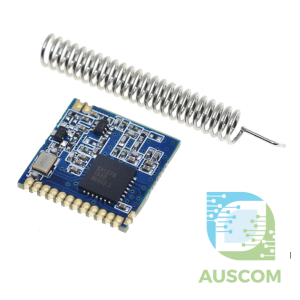
- Compact Integration: Despite its advanced capabilities, the NRF24L01+PA+LNA wireless module boasts a compact size of 41mm x 15.5mm, allowing for effortless embedding into your projects.
Product Details:
- Voltage Range: 3V to 3.6V
- Maximum Output Power: +20 dBm
- Transmit Mode Current: 115mA
- Receiver Mode Current: 45mA
- Sleep Mode Current: 4.2uA
- Operating Temperature: -20°C to 70°C
- Receiver Sensitivity: -92dBm (2Mbps), -95dBm (1Mbps), -104dBm (250kbps)
- PA Gain: 20dB
- LNA Gain: 10dB
- LNA Noise Figure: 2.6dB
- Antenna Gain: 2dBI
- Data Rate: Up to 2Mbps
Elevate your wireless projects with the NRF24L01+PA+LNA wireless module. Whether you’re a hobbyist or a professional, this module empowers you to achieve extended communication ranges with confidence. Enjoy seamless connectivity and reliable performance for your Arduino-based projects and beyond.
📌 Code Examples & Usage – 1100m nRF24L01+ PA+LNA Wireless Module
📋 Overview
This nRF24L01+ compatible PA+LNA wireless module is designed for long-range 2.4GHz communication, with typical line-of-sight ranges up to ~1100 metres when used with a stable power supply and antenna.
Compared to standard nRF24L01 modules, this version includes:
-
PA (Power Amplifier) for stronger transmit power
-
LNA (Low Noise Amplifier) for improved receive sensitivity
-
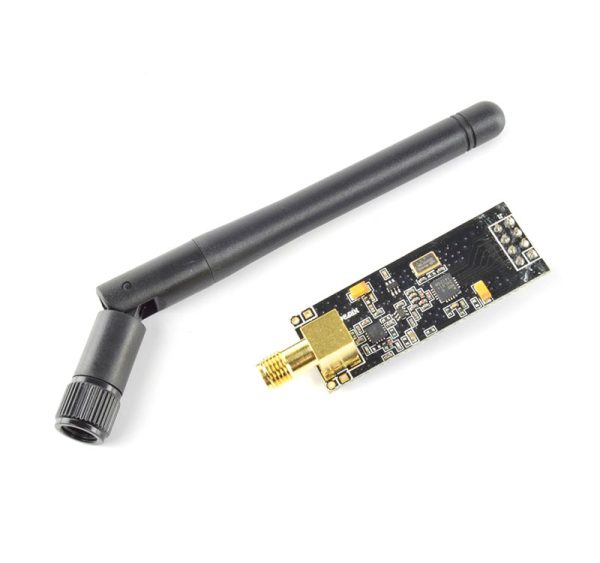
External antenna for extended range
Ideal for:
-
Long-range wireless sensors
-
Telemetry & data links
-
Remote control systems
-
Arduino / ESP32 / ESP8266 projects
-
Battery or solar-powered nodes
📌 This module uses the nRF24 protocol, not Wi-Fi or Bluetooth.
⚙ Key Features
-
Frequency: 2.4GHz ISM band
-
Interface: SPI
-
Voltage: 3.3V ONLY
-
PA+LNA long-range design
-
External antenna (SMA / IPEX depending on version)
-
Compatible with RF24 (TMRh20) libraries
⚠ CRITICAL – Power Supply Requirements
🚨 Power quality is the #1 cause of issues with PA+LNA modules
This module draws significantly more current than standard nRF24L01 boards, especially during transmission bursts.
✅ Strongly Recommended
-
Dedicated 3.3V regulator (buck or LDO)
-
Large decoupling capacitor placed as close as possible to the module:
-
47µF–220µF electrolytic
-
Plus 0.1µF ceramic
-
❌ Do NOT rely on:
-
Arduino Uno 3.3V pin
-
Weak USB-to-3.3V supplies
📌 Most “range issues” are actually power instability issues.
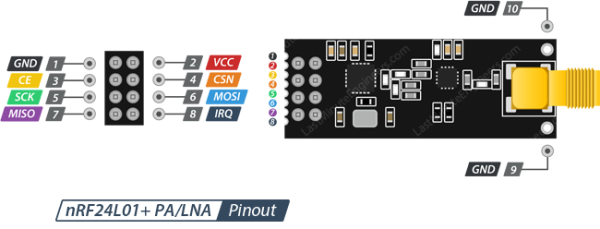
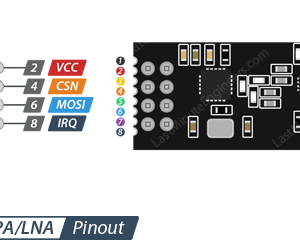
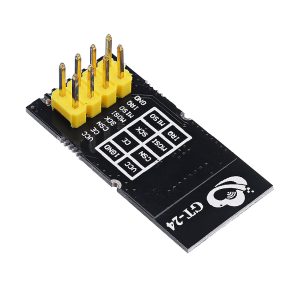
🔌 Pinout (SPI)
| Pin | Function |
|---|---|
| VCC | 3.3V |
| GND | Ground |
| CE | Chip Enable |
| CSN | SPI Chip Select |
| SCK | SPI Clock |
| MOSI | SPI MOSI |
| MISO | SPI MISO |
| IRQ | Interrupt (optional) |
🔌 Wiring – Arduino Uno / Nano
| nRF24L01 | Arduino |
|---|---|
| VCC | 3.3V regulator output |
| GND | GND |
| CE | D9 |
| CSN | D10 |
| SCK | D13 |
| MOSI | D11 |
| MISO | D12 |
📌 Add the capacitor directly across VCC ↔ GND at the module.
🔌 Wiring – ESP32 (Recommended Platform)
| nRF24L01 | ESP32 |
|---|---|
| VCC | 3.3V (stable supply) |
| GND | GND |
| CE | GPIO27 |
| CSN | GPIO5 |
| SCK | GPIO18 |
| MOSI | GPIO23 |
| MISO | GPIO19 |
📦 Library Installation (Arduino IDE)
Install RF24 by TMRh20:
-
Arduino IDE → Library Manager
-
Search: RF24
-
Install RF24 (TMRh20)
🧪 Example 1️⃣ – Long-Range Transmitter (TX)
🧪 Example 2️⃣ – Long-Range Receiver (RX)
📶 Recommended RF Settings for Maximum Range
| Setting | Value |
|---|---|
| Data Rate | RF24_250KBPS |
| PA Level | Start LOW, increase if stable |
| Channel | 90–120 (avoid Wi-Fi overlap) |
| Retries | Enabled (default) |
📌 Increase PA level only after confirming stable power.
📡 Antenna Notes
✔ Always connect the antenna before powering up
✔ Never transmit without an antenna attached
✔ Keep antenna vertical and clear of metal
✔ Line-of-sight dramatically improves range
🧠 Common Issues & Fixes
| Issue | Cause | Fix |
|---|---|---|
| Short range | Weak 3.3V supply | Use regulator + capacitor |
| Random dropouts | Voltage dips | Increase bulk capacitance |
| No communication | Channel conflict | Change channel |
| ESP32 instability | Shared power | Separate regulator |
Additional information
| Weight | 30 g |
|---|---|
| Dimensions | 260 × 160 × 20 mm |
Only logged in customers who have purchased this product may leave a review.








Reviews
There are no reviews yet.