
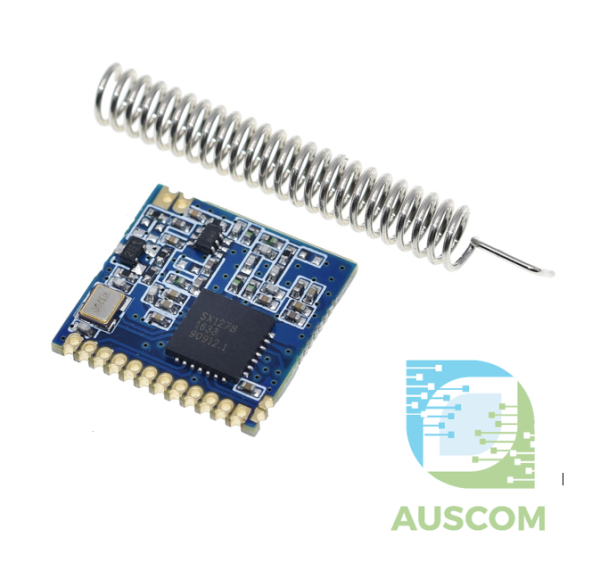
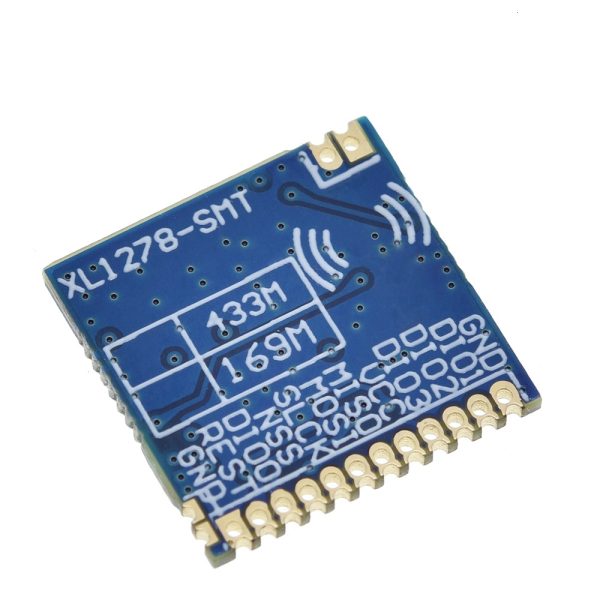
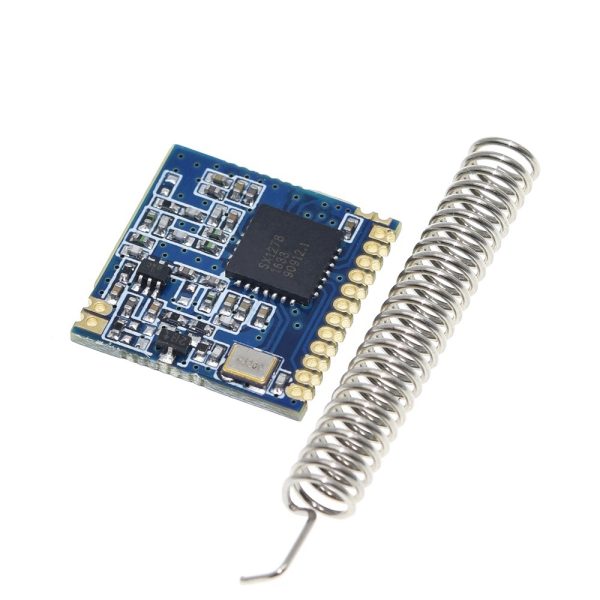
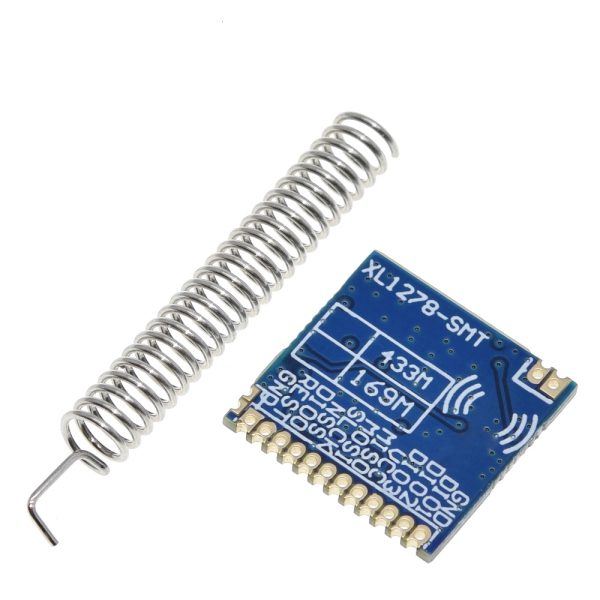
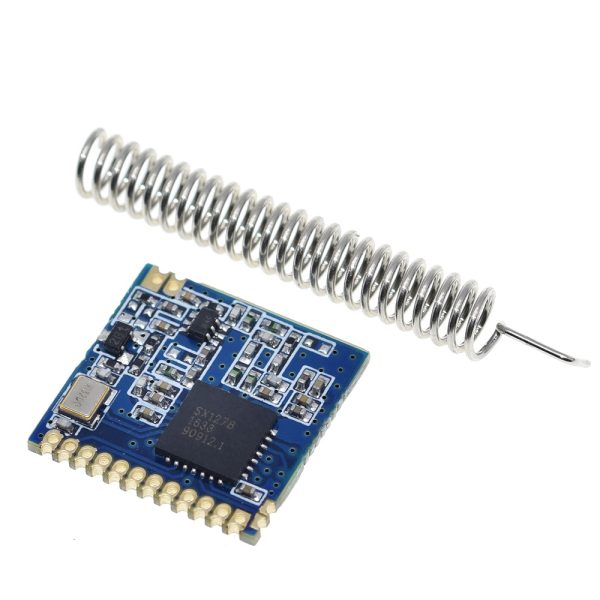
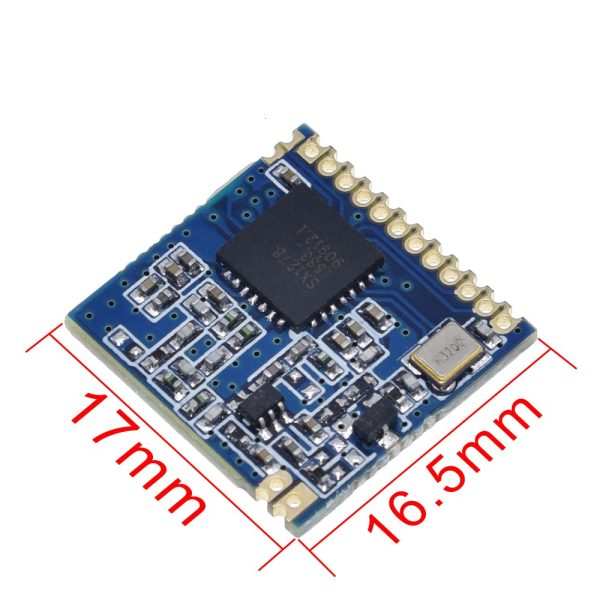
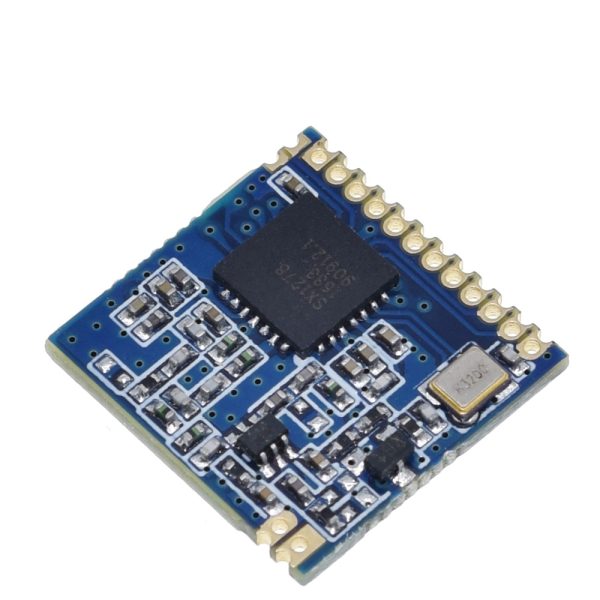
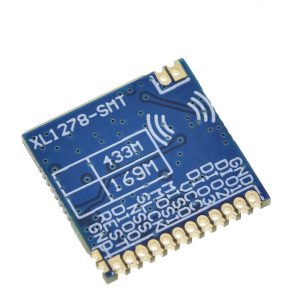
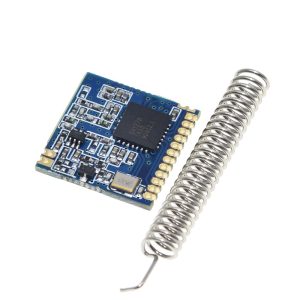
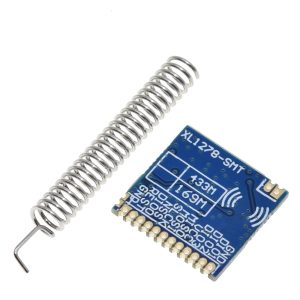
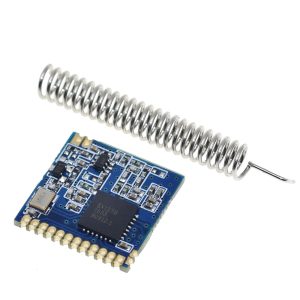
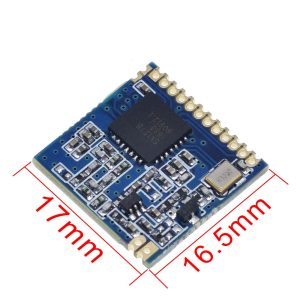
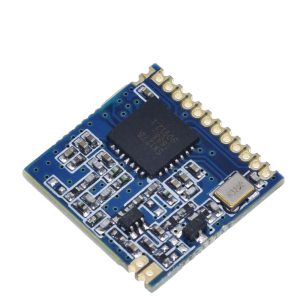
DRF1278F 433MHz LoRa SX1278 Long Range RF Wireless Module Arduino

$9.95 Inc. GST
You save
- Description
- Code Examples
- Additional information
- Reviews (0)
Description
📡 DRF1278F 433MHz LoRa SX1278 Long-Range RF Wireless Module | AuscomTech
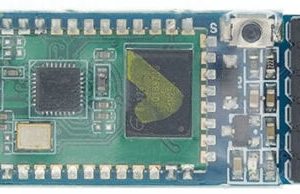
The DRF1278F 433MHz LoRa Wireless Module is a high-performance, low-power RF communication module based on the Semtech SX1278 transceiver.
It combines traditional FSK/GFSK modulation with advanced LoRa™ spread-spectrum technology, delivering exceptional long-range communication, high sensitivity, and strong anti-interference performance.
Designed for Arduino-compatible development, IoT systems, and industrial telemetry, the DRF1278F is ideal for applications requiring reliable wireless links over long distances with minimal power consumption.
⭐ Key Features
📡 LoRa™ Long-Range Wireless Technology
Uses Semtech SX1278 LoRa modulation to achieve long-distance communication (up to 5 km line-of-sight in open environments).
🎯 High Receiver Sensitivity
-
Up to -148 dBm sensitivity (LoRa mode)
-
Maintains stable links in low-signal and noisy RF environments
⚡ Low Power Consumption
-
Receive current: ~10–12 mA
-
Optimised for battery-powered and solar-powered devices
🚀 High Output Power
-
Adjustable RF output up to +20 dBm
-
Enables strong signal penetration and long-range coverage
🛡️ Excellent Anti-Interference Performance
-
Channel rejection: 56 dB
-
Strong resistance to RF noise and jamming
🔄 Multiple Modulation Modes
-
LoRa™
-
FSK / GFSK
Supports FIFO mode and direct transmission for flexible firmware design.
🔧 Advanced RF Features
-
AFC (Automatic Frequency Control)
-
Carrier sensing
-
Forward Error Correction (FEC)
-
Low-power sleep modes
📐 Compact & Easy to Integrate
-
Small footprint module
-
SPI interface for direct connection to microcontrollers
📊 Technical Specifications
RF & Performance
-
Chipset: Semtech SX1278
-
Frequency Range: 410 – 525 MHz
-
Typical Operating Frequency: 433 MHz
-
Transmit Power: +19 to +20.5 dBm
-
Channel Rejection: 56 dB
Receiver Sensitivity
-
FSK @ 1.2 kbps (±5 kHz): -121 dBm
-
LoRa @ 146 bps, BW 62.5 kHz, SF12: -139 dBm
-
LoRa @ 293 bps, BW 125 kHz, SF12: -133 dBm
Electrical
-
Operating Voltage: 1.8 – 3.6 V
-
Receive Current: ~10–12 mA
-
Interface: SPI
Environmental
-
Operating Temperature: -20°C to +70°C
Physical
-
Dimensions: 17 × 16.5 mm
🧩 Compatible With
• Arduino (with 3.3V logic)
• ESP32 / ESP8266
• STM32 microcontrollers
• Raspberry Pi (via SPI & level shifting)
• Custom IoT and embedded systems
🔧 Typical Applications
• LoRa IoT sensor nodes
• Smart agriculture monitoring
• Wireless metering (water, gas, electricity)
• Industrial telemetry & automation
• Remote data acquisition
• Wireless alarm and security systems
• Smart home & building automation
• Long-range RF control systems
⚠️ Important Notes
• 3.3V logic only – not 5V tolerant
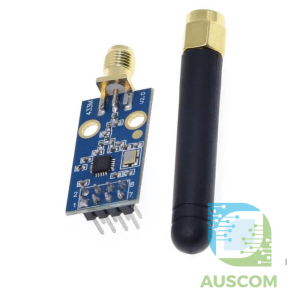
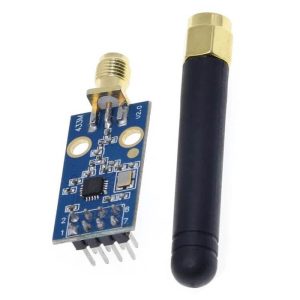
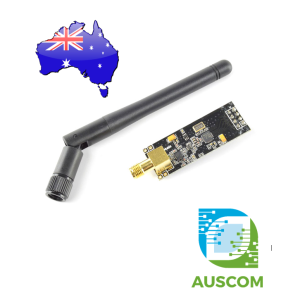
• External antenna required for optimal range
• RF performance depends on antenna design, environment, and firmware configuration
📦 Package Includes
• 1 × DRF1278F 433MHz LoRa SX1278 RF Wireless Module
📌 Code Examples & Usage – 433 MHz LoRa SX1278 (DRF1278F) Long-Range RF Module
📋 Overview
The SX1278 LoRa module is a long-range, low-power wireless transceiver operating in the 433 MHz ISM band. It uses SPI communication and supports true LoRa modulation, making it ideal for:
-
Long-distance sensor networks
-
Telemetry & monitoring
-
IoT projects
-
Point-to-point wireless links
-
Low-power data transmission
With the right settings, LoRa can achieve kilometres of range (line-of-sight).
⚠ Important Notes Before You Start
✔ 433 MHz antenna is required — never power the module without one
✔ Logic level is 3.3 V (most SX1278 boards are NOT 5 V tolerant)
✔ Use a 3.3 V regulator capable of supplying burst current
✔ Works with Arduino (via level shifting) and ESP32 (native 3.3 V)
🔌 Typical Pin Connections (SPI)
SX1278 → Arduino / ESP32
| SX1278 Pin | Function | Arduino UNO | ESP32 (Example) |
|---|---|---|---|
| VCC | 3.3 V | 3.3 V | 3.3 V |
| GND | Ground | GND | GND |
| SCK | SPI Clock | D13 | GPIO18 |
| MISO | SPI MISO | D12 | GPIO19 |
| MOSI | SPI MOSI | D11 | GPIO23 |
| NSS / CS | Chip Select | D10 | GPIO5 |
| RST | Reset | D9 | GPIO14 |
| DIO0 | IRQ | D2 | GPIO26 |
⚠ If using Arduino UNO, use level shifters or SPI resistors for safety.
📦 Library Setup (Arduino IDE)
Install the LoRa library by Sandeep Mistry:
-
Arduino IDE → Library Manager
-
Search “LoRa”
-
Install LoRa by Sandeep Mistry
🧪 Example 1 — Basic LoRa Transmitter (433 MHz)
🧪 Example 2 — Basic LoRa Receiver
Upload this sketch to the receiving node.
📡 Example 3 — Send Sensor Data (Temperature)
On the receiver side, parse the string to extract values.
⚙ Example 4 — Optimising Range vs Speed
Typical Settings
| Use Case | Spreading Factor |
|---|---|
| Short range / fast | SF7 |
| Balanced | SF9 |
| Long range | SF12 |
🔋 Low-Power Tip (Sleep Between Transmissions)
This is ideal for battery-powered sensor nodes.
🧠 Troubleshooting Tips
-
Nothing received?
-
Check frequency is 433E6 on both ends
-
Ensure antennas are connected
-
Confirm NSS / DIO0 wiring
-
-
Garbage data?
-
Both ends must use the same SF, bandwidth, coding rate
-
-
Short range?
-
Increase spreading factor
-
Improve antenna quality
-
Ensure clear line-of-sight
-
Additional information
| Weight | 50 g |
|---|---|
| Dimensions | 260 × 160 × 20 mm |
Only logged in customers who have purchased this product may leave a review.








Reviews
There are no reviews yet.