
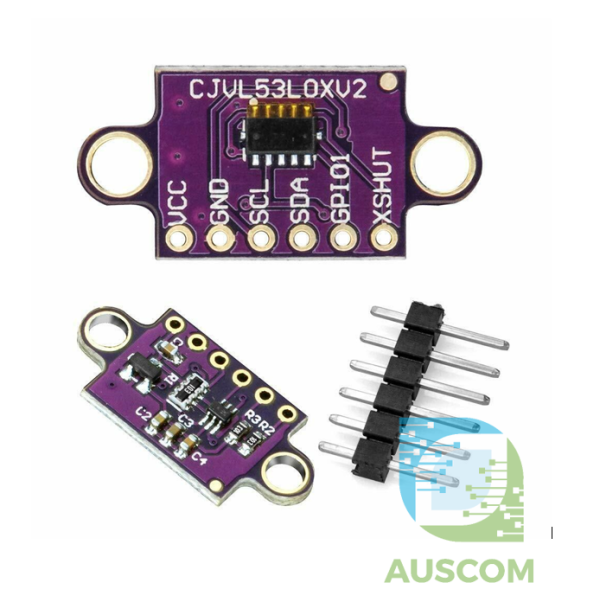
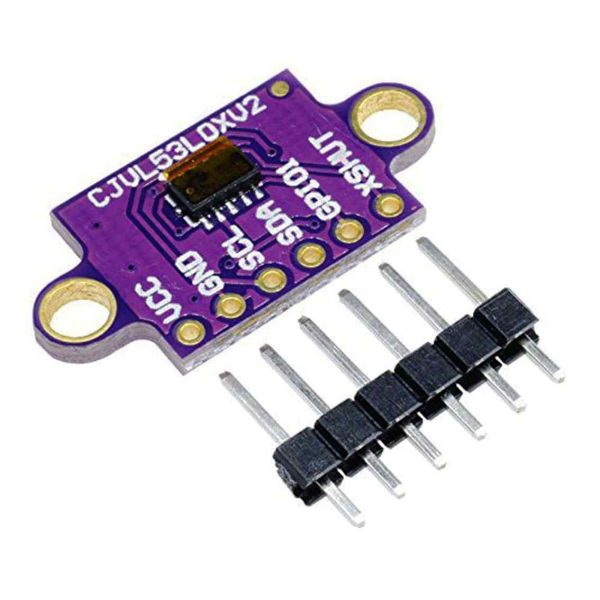
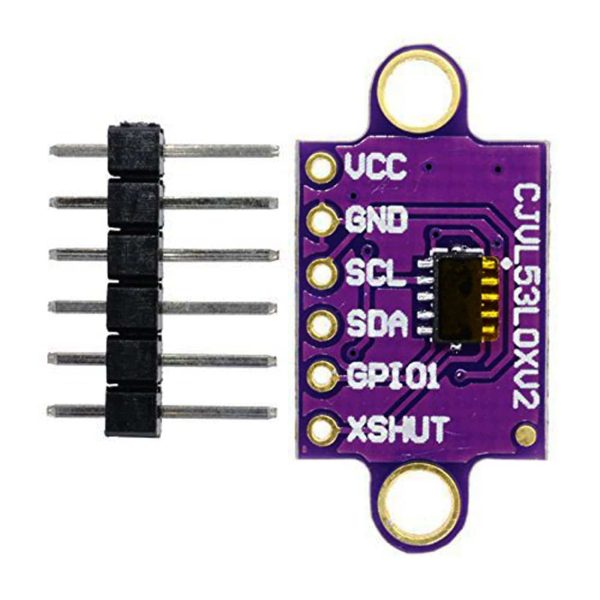
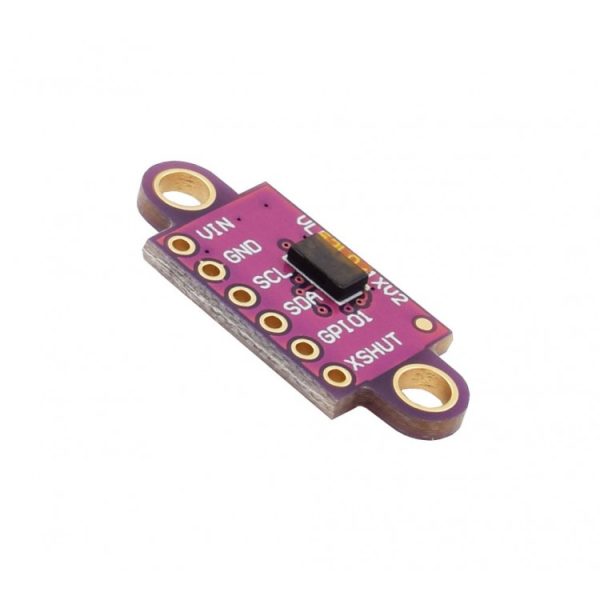
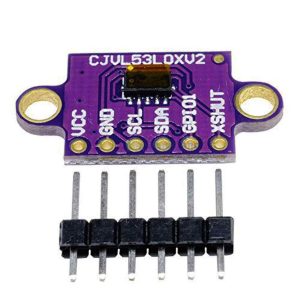
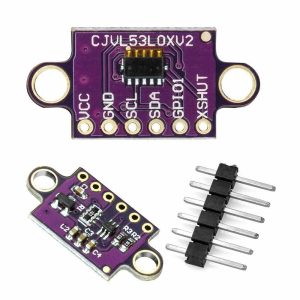
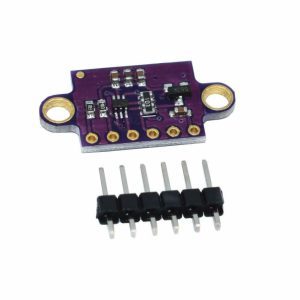
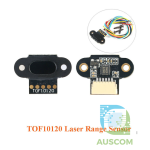
VL53L0X ToF Laser Ranging Sensor 940nm GY-VL53L0XV2 I2C Distance Module for Robotics IoT

$6.50 Inc. GST
You save
- Description
- Code Examples
- Additional information
- Reviews (0)
Description
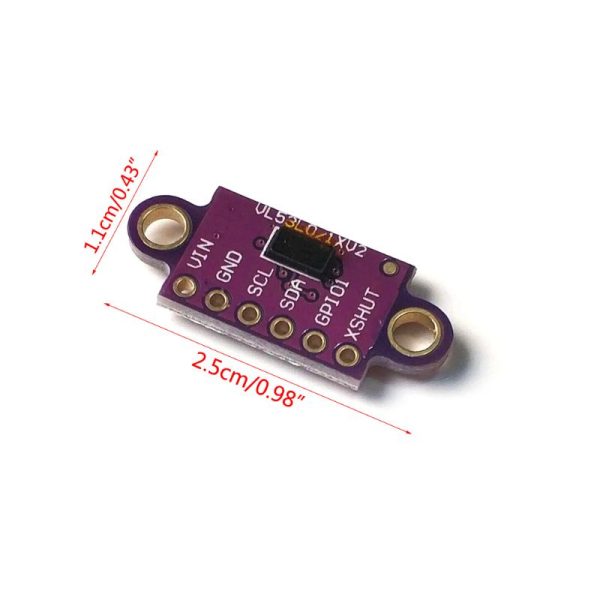
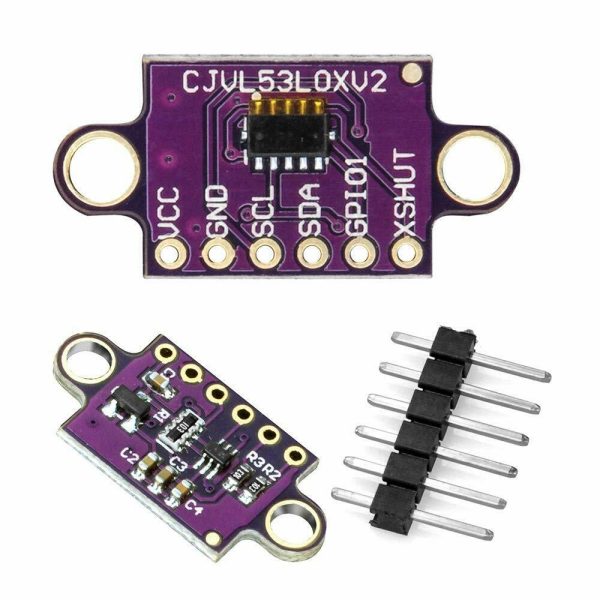
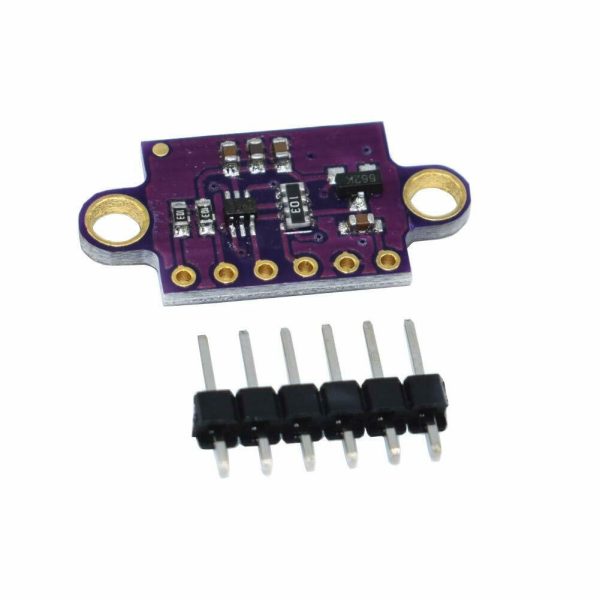
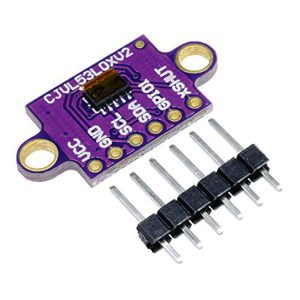
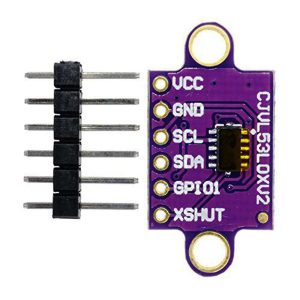
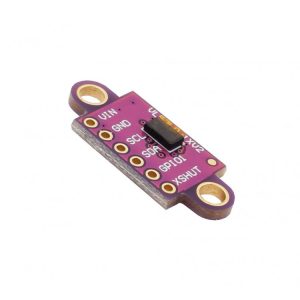
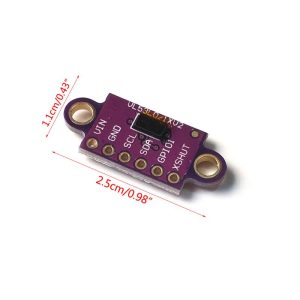
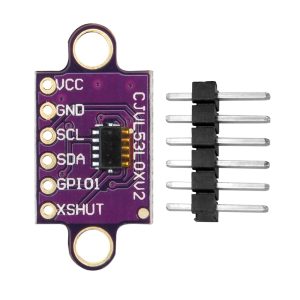
VL53L0X Time-of-Flight (ToF) Laser Ranging Sensor – 940nm GY-VL53L0XV2 I2C Laser Distance Module
Unlock the power of cutting-edge technology with the VL53L0X Time-of-Flight (ToF) Laser Ranging Sensor module. Developed by STMicroelectronics, this compact and powerful sensor provides precise distance measurement up to 2 meters (6.6 feet) with 1mm resolution, ideal for a wide range of applications including robotics, automation, and IoT devices.
Key Features:
- High-Precision Distance Measurement: Utilizing ST’s FlightSense technology, this sensor accurately measures the time it takes for infrared laser pulses to travel to and from a target, offering distance precision without being affected by the target’s reflectivity.
- Range & Resolution: The VL53L0X offers accurate distance measurements up to 2 meters, with an impressive 1mm resolution, making it perfect for projects requiring high-precision ranging.
- Communication via I2C Interface: Easy integration with microcontrollers and development boards via I2C (TWI) interface for seamless sensor adjustments.
- Compact Design: Housed in a small leadless LGA package, this sensor is designed for space-efficient applications without compromising on performance.
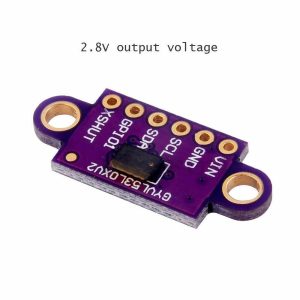
- Low Voltage Operation: Operates at a recommended 2.8V for optimal performance, while the breakout board makes it easier to interface with 3.3V and 5V microcontrollers.
Enhanced Versatility:
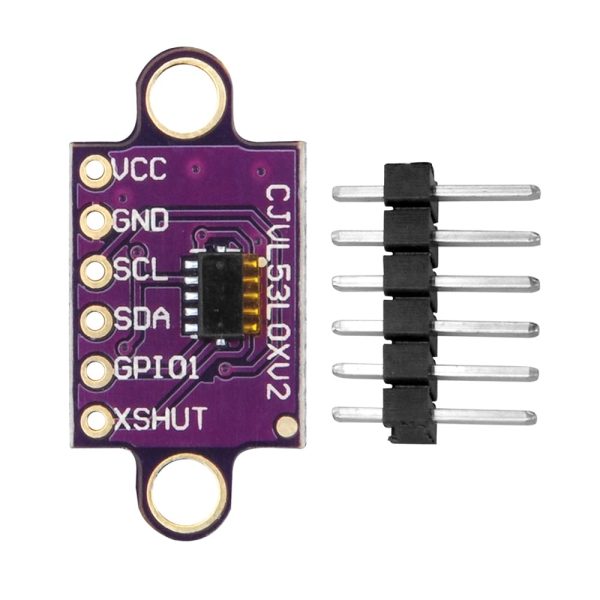
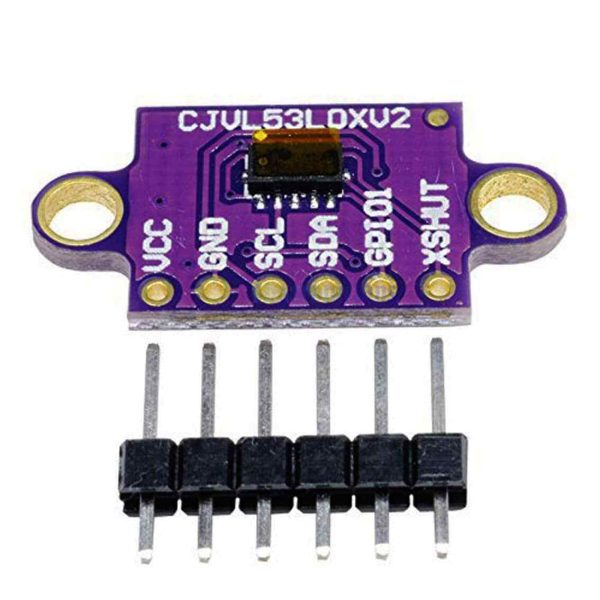
The GY-VL53L0XV2 breakout board offers flexibility with:
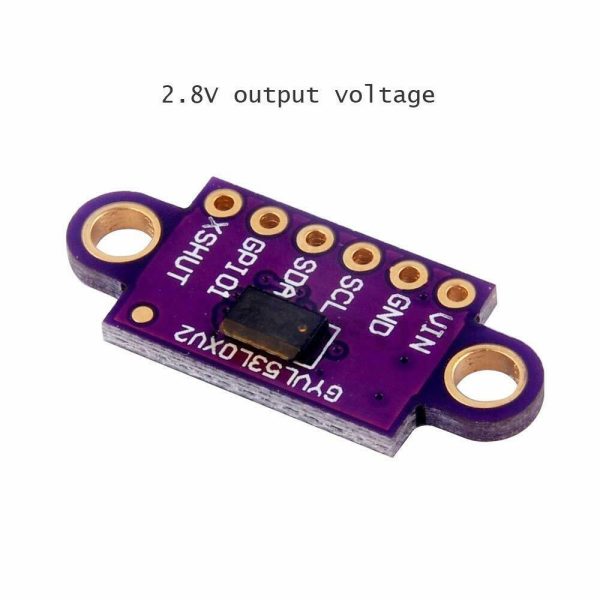
- VDD: Powers external components with 2.8V output, capable of delivering up to 150mA current.
- VIN: Supplies power from 2.6V to 5.5V, with level shifting for I2C lines (SCL & SDA).
- SDA & SCL: Level-shifted I2C data and clock lines for smooth communication at various voltage levels.
- XSHUT Pin: Enables hardware shutdown with an active-low input, allowing easy power management.
Applications:
- Robotics: Precise range finding for obstacle detection and path planning.
- IoT Devices: Accurate environmental monitoring and distance-based triggers.
- Industrial Automation: Automated systems relying on exact distance measurements for control.
Get Started Quickly:
This breakout board makes it easier than ever to connect the VL53L0X sensor to your projects, offering simple configuration and powerful functionality. Whether you’re a student, developer, or engineer, this module is designed to enhance your innovation.
📌 Code Examples & Usage – VL53L0X Time-of-Flight Laser Distance Sensor (GY-VL53L0X V2)
📋 Overview
The VL53L0X is a Time-of-Flight (ToF) laser distance sensor that measures distance by timing how long a laser pulse takes to reflect back from an object.
Key features:
-
Measurement range: ~30 mm to 2000 mm (2 m)
-
Resolution: millimetre-level accuracy
-
Laser wavelength: 940 nm (invisible IR)
-
Interface: I²C
-
Fast response and ambient-light resistant
-
Compact size: ideal for robotics and embedded projects
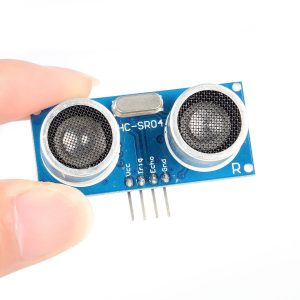
Unlike ultrasonic sensors, ToF sensors are quiet, precise, and unaffected by sound or airflow.
⚠ Important Notes
-
Logic level: 3.3 V (most breakout boards are not 5 V tolerant on I²C)
-
Works perfectly with ESP32, Raspberry Pi, and 3.3 V Arduinos
-
For 5 V Arduinos (Uno/Nano), use:
-
Level shifting or
-
Ensure the breakout has onboard level shifting (many do — check your board)
-
🔌 Wiring – I²C Connection
Typical Pin Mapping
| VL53L0X | Arduino Uno | ESP32 (Example) |
|---|---|---|
| VCC | 3.3 V | 3.3 V |
| GND | GND | GND |
| SDA | A4 | GPIO21 |
| SCL | A5 | GPIO22 |
| XSHUT | Optional | Optional |
XSHUT is only needed if using multiple sensors on the same I²C bus.
📦 Library Installation (Arduino IDE)
-
Open Arduino IDE
-
Go to Sketch → Include Library → Manage Libraries
-
Search for “VL53L0X”
-
Install Adafruit VL53L0X library (recommended)
🧪 1️⃣ Arduino Example – Basic Distance Measurement
🧪 2️⃣ ESP32 Example
🧪 3️⃣ Using Multiple VL53L0X Sensors (I²C Address Change)
All VL53L0X sensors start at I²C address 0x29.
To use multiple sensors on one bus, you must control XSHUT pins and assign new addresses.
Each sensor needs a dedicated XSHUT GPIO.
🧠 Tips for Best Performance
✔ Best accuracy between 50–1200 mm
✔ Works best on flat, light-coloured surfaces
✔ Dark, angled, or absorbent surfaces reduce range
✔ Avoid mounting behind glass or plastic
✔ Keep sensor stable for consistent readings
🧠 Common Use Cases
-
Obstacle avoidance (robots)
-
Liquid level sensing (non-contact)
-
Presence detection
-
Gesture sensing
-
Smart automation
-
Distance-based triggers
Additional information
| Weight | 30 g |
|---|---|
| Dimensions | 260 × 160 × 20 mm |
Only logged in customers who have purchased this product may leave a review.










Reviews
There are no reviews yet.